

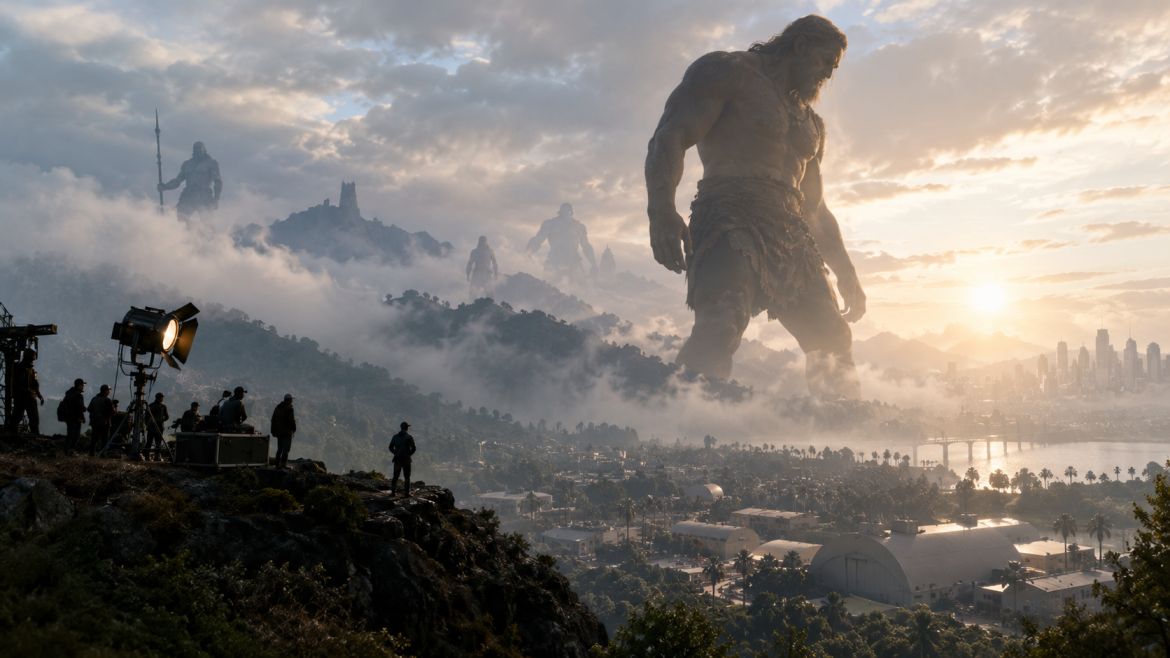
Size has always captivated the cinematic imagination, from mythological creatures to towering robots and superheroes. Among the giants of film history, certain figures stand out for their memorable impact. At the pinnacle is Talos from “Jason and the Argonauts” (1963), a colossal bronze guardian brought to life through Ray Harryhausen’s stop-motion wizardry. The scene where Talos comes alive, accompanied by Bernard Herrmann’s score, remains a hallmark of fantasy cinema, showcasing scale and suspense. This sequence embodies not just a monstrous presence but the tragic consequence of violating sacred boundaries.
In “The Princess Bride” (1987), André the Giant’s portrayal of Fezzik brings warmth and humor without relying on special effects. His natural stature and gentle personality make Fezzik one of cinema’s most beloved giants. Similarly, “The Thief of Bagdad” (1940) features a formidable genie, realized through visual effects that were groundbreaking at the time. Rex Ingram’s portrayal contributes to the richly imaginative landscape, setting a standard for future fantasy films.
More recent films also explore the theme of giants. In “The Green Knight” (2021), mysterious towering figures enhance the film’s dreamlike atmosphere, while “The Odyssey” (2026) features an intense encounter with the Cyclops Polyphemus, realized through a blend of practical effects and animatronics. This portrayal highlights the creature’s menacing isolation. In “Fellini’s Casanova” (1976), a surreal arm-wrestling match with a giant woman adds to the film’s theatrical excess, showcasing Federico Fellini’s unique cinematic style.
Other notable giants include the Iron Giant from the 1999 animated film, who evolves from a simple robot to a character with emotional depth, and the djinn in “Three Thousand Years of Longing” (2022), whose size shifts fluidly, reflecting the film’s storytelling fantasy. Not to be forgotten are the stone giants in “The Hobbit: An Unexpected Journey” (2012), a brief yet spectacular showcase of Middle-earth’s ancient threats, and the BFG in Steven Spielberg’s 2016 adaptation, where digital effects bring Roald Dahl’s beloved character to life.
Film has often used giants to explore themes of power, vulnerability, and the unknown, whether through the monstrous form of the 1958 “Attack of the 50ft Woman” or the introspective portrayal of the Hulk in Ang Lee’s 2003 film. From the towering Cyclops of “Ulysses” (1954) to the gentle Karl the Giant in “Big Fish” (2003), these cinematic giants leave a lasting impression, each contributing uniquely to the storytelling landscape. Their portrayal, whether through visual effects or physical performance, continues to captivate audiences by exploring the extraordinary within the familiar.