
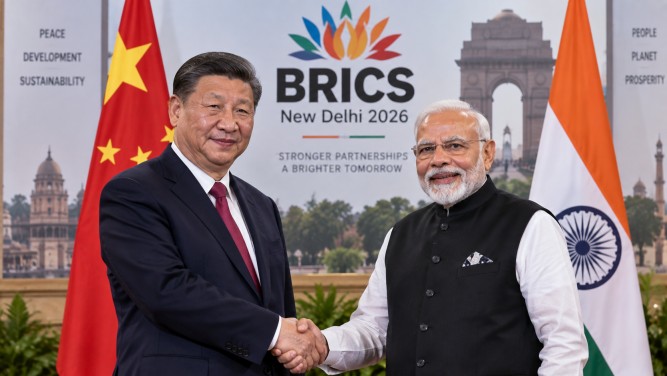
Chinese President Xi Jinping is set to visit India for the first time in nearly seven years as he attends the 18th BRICS Summit in New Delhi from September 12-13. His anticipated meeting with Indian Prime Minister Narendra Modi is expected to be a focal point, as both nations strive to ease tensions that have persisted since the 2020 military confrontation in eastern Ladakh. The deadly clash in the Galwan Valley in June 2020, which resulted in the death of 20 Indian soldiers and at least four Chinese troops, severely strained bilateral relations.
Efforts to mend ties began to show progress following an agreement reached in October 2024, focused on disengagement in the Depsang and Demchok areas. This paved the way for a meeting between Modi and Xi at the BRICS summit in Kazan, where they discussed reviving mechanisms to address the border disputes and rebuild bilateral relations. Since then, India and China have resumed direct flights, restarted the Kailash Mansarovar Yatra, and continued diplomatic and military talks aimed at maintaining peace along the border.
In a significant move in August, National Security Adviser Ajit Doval and Chinese Foreign Minister Wang Yi agreed on an eight-point consensus. This consensus includes additional military meeting points, the establishment of new hotline channels, and the reopening of three designated border trading points. Further efforts to stabilize relations were evident when the two countries conducted a corps commander-level meeting in the eastern sector on September 6.
India has maintained that peace and tranquillity along the border are crucial for fully normalizing relations with China. The discussions between Xi and Modi are expected to reveal the extent to which both sides are prepared to move forward in stabilizing their relationship, while addressing ongoing boundary disputes. The BRICS summit will also serve as a platform for leaders to engage in broader discussions on global political and economic issues, including conflicts, economic cooperation, and reforms to multilateral institutions.