

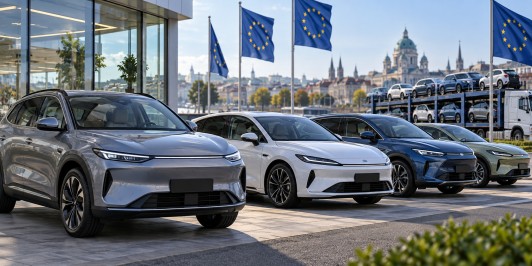
Chinese-made hybrid cars are rapidly gaining traction in the European Union, with sales figures showing a significant increase that has sparked concern among EU officials over competition with European car manufacturers. Sales of fully hybrid vehicles produced in China escalated from 659 units in 2022 to 160,662 in the first seven months of 2026. Similarly, Chinese plug-in hybrid sales rose from 56,706 units in 2022 to 217,764 in the same timeframe this year.
This surge follows the European Union’s implementation of anti-subsidy tariffs on Chinese electric vehicles in 2024, which did not extend to hybrid models. As a result, Chinese hybrids have gained a stronger foothold in the market. The European Commission has approached China, suggesting a voluntary limitation on hybrid vehicle exports to the EU to prevent further market disruption. If negotiations fail, the EU may consider imposing safeguard measures, potentially including quotas.
Chinese automotive companies such as BYD, Chery, and Leapmotor have seen robust growth in the European market, with Geely leading as the largest Chinese automotive group in Europe. BYD alone has sold approximately 177,000 vehicles in the EU, while Geely’s sales reached about 205,000 vehicles in the first eight months of 2026. Despite these figures, European manufacturers still maintain the largest overall market share in the region.
Hybrid vehicles now constitute nearly 37% of the European car market, surpassing the presence of fully electric vehicles, which account for just over 21%. This growth in hybrid market share highlights the shifting dynamics within the EU’s automotive industry, as it grapples with addressing its trade imbalance with China and safeguarding the competitiveness of its local car manufacturers.