

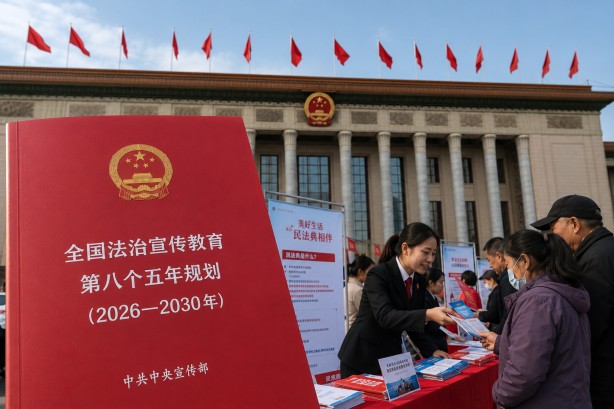
China has unveiled a comprehensive five-year plan covering the period from 2026 to 2030, with the primary aim of enhancing public legal education and reinforcing the rule of law as integral components of its broader modernization efforts. This strategic plan is designed to elevate legal awareness among both government officials and the general populace, while also striving to make legal education more systematic, standardized, and driven by technological advancements by the close of the decade.
A significant focus of the initiative is on educating citizens about laws that pertain to the business environment, as well as the private and digital economies. Additionally, it emphasizes the importance of understanding intellectual property rights and financial regulations, with the overarching goal of ensuring better protection for consumers and investors alike.
Furthermore, the plan underscores the need for comprehensive legal knowledge across various sectors. It includes areas such as foreign trade, cross-border investment, and the resolution of international commercial disputes. By doing so, it aims to equip individuals and businesses with the necessary tools to navigate these complex arenas effectively.
Environmental protection is also a highlighted area within the plan, reflecting China’s growing commitment to addressing ecological challenges. The initiative additionally prioritizes personal data security and the prevention of telecom and online fraud, recognizing the increasing importance of safeguarding personal information in a digital world.
In summary, China’s new five-year strategy is set to play a pivotal role in building a legally informed society, focusing on critical areas that impact both domestic and international spheres. By fostering a robust understanding of legal principles, the plan aims to support the country’s ongoing modernization and economic development objectives.