

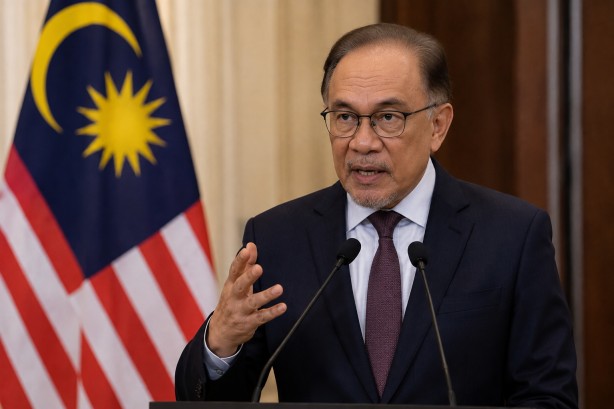
In a recent statement, Malaysian Prime Minister Anwar Ibrahim reaffirmed Malaysia’s adherence to the One China policy by acknowledging Taiwan as part of China, a move that has garnered mixed reactions from Beijing and Taipei. While Beijing has shown approval of Anwar’s comments, viewing them as aligned with its stance on Taiwan, Taipei has expressed disapproval, reiterating its view of being a separate entity and cautioning that such remarks could exacerbate military tensions.
Malaysia’s One China policy, initiated in 1974 when it established diplomatic ties with Beijing, recognizes the People’s Republic of China as the legitimate government and accepts its position on Taiwan. Despite this acknowledgment, Malaysia emphasizes the necessity of a peaceful resolution to the ongoing cross-strait tensions. Anwar’s recent comments have prompted discussions about Malaysia’s diplomatic positioning, especially concerning its economic interactions with Taiwan.
Although Malaysia does not maintain formal diplomatic relations with Taiwan, the two regions have cultivated strong economic, cultural, and technological connections through representative offices. Anwar’s remarks may influence the dynamics of these ties, particularly with Taiwanese businesses and investors who might be wary of potential geopolitical risks. Nonetheless, Malaysia is expected to continue its strategy of balancing its robust relationship with China alongside its significant economic engagements with Taiwan.
The trade relationship between Malaysia and Taiwan is substantial, with bilateral trade reaching approximately US$54.49 billion in 2025. This makes Taiwan a key trading partner for Malaysia, underscoring the economic interdependence that exists despite diplomatic differences. The mutual economic interests are likely to encourage ongoing cooperation, even as political statements create ripples in the diplomatic landscape.