

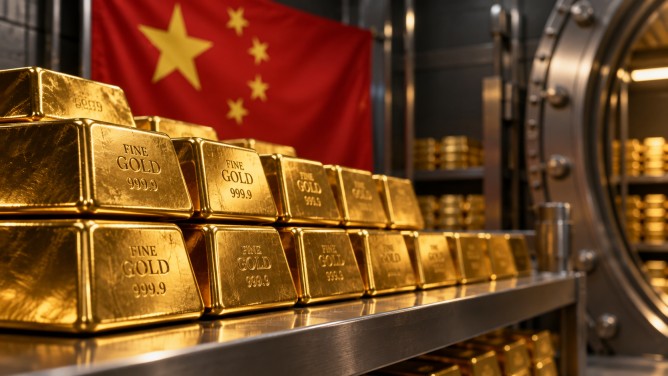
China’s central bank has expanded its gold reserves for the 23rd month in a row, continuing a strategy aimed at bolstering its financial security amid global uncertainty. In September, the People’s Bank of China increased its official gold holdings to 77.47 million ounces, up from 76.73 million ounces in August. This marks an addition of approximately 740,000 ounces during the month, surpassing the 650,000 ounces added in August.
The ongoing acquisition of gold by China comes despite the fluctuations in global gold prices. Analysts suggest that augmenting gold holdings is a strategic move to diversify China’s reserves and shield the nation against international financial and geopolitical risks. Traditionally seen as a hedge against inflation, gold is increasingly used by central banks to manage financial and geopolitical vulnerabilities.
In addition to risk management, China’s persistent gold purchases are seen as part of a broader effort to bolster the credibility of its currency, the yuan, and to lay the groundwork for its gradual internationalization. This strategy is expected to continue as part of China’s comprehensive reserve management plan.
While China’s gold reserves are on the rise, its foreign exchange reserves declined in September. The reserves were reported at $3.4003 trillion at the end of the month, a decrease of $38.1 billion, or 1.11%, from August. This drop is attributed to changes in exchange rates and the movements in global financial asset prices, influenced by shifts in the global economic environment and monetary policies.
Despite the reduction in foreign exchange reserves, Chinese authorities maintain that the country’s stable economic conditions provide a robust foundation for maintaining overall stability in its reserves. The central bank’s continued focus on gold acquisition plays a crucial role in this stability, aligning with its broader economic strategies.