

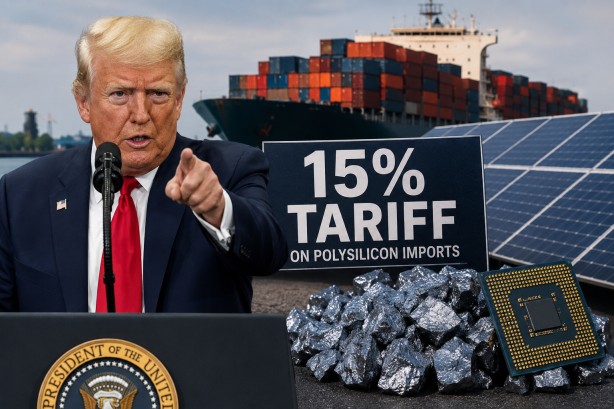
In a move to bolster domestic manufacturing and reduce dependency on Chinese imports, President Donald Trump has announced a 15% tariff on imported products made with polysilicon. This material is crucial for the production of semiconductors and solar panels, and the tariff is set to be enforced starting December 4. Polysilicon is an ultra-pure form of silicon integral to the creation of semiconductors that power artificial intelligence systems, data centers, and solar energy equipment. Currently, China leads global production of this essential material.
The newly introduced measures establish minimum import prices for polysilicon-related products: $21 per kilogram for the material itself, $100 per kilogram for polysilicon ingots and wafers, $0.22 per watt for solar cells, and $0.38 per watt for solar modules and panels. The U.S. administration indicates that these steps are designed to enhance the commercial sustainability of domestic polysilicon production and secure critical supply chains vital to both economic and national security interests. This policy shift coincides with China’s continued expansion in exports, especially in the electronics and artificial intelligence sectors.
China has responded critically to the tariff imposition, accusing the U.S. of misusing national security justifications to hinder Chinese companies and cautioning against the potential for increased protectionism to disrupt bilateral trade relations. Despite these tensions, the U.S. stands by its strategy, citing the necessity to support its own industries.
Within the U.S., there are two major facilities engaged in polysilicon production: Hemlock Semiconductor based in Michigan and Wacker Chemie located in Tennessee. The policy not only imposes tariffs but also opens the door for the U.S. government to offer incentives to companies that invest in domestic polysilicon manufacturing and related infrastructure.