
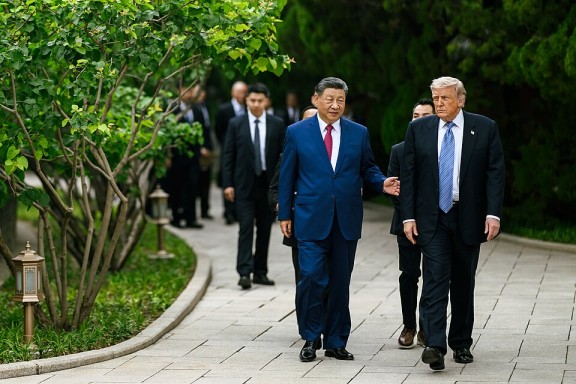
The gathering of G7 leaders in France has sparked a renewed debate about whether China should be included in talks that significantly influence the global economy and international politics. Although China was not part of the original formation of the group in 1975, when leading industrial democracies came together to tackle economic challenges, its role on the world stage has evolved dramatically. Back then, China was not a major economic force and was largely disconnected from the global financial network. Today, it stands as the world’s second-largest economy, exerting substantial influence in international trade, manufacturing, technology, energy markets, and supply chains.
This economic clout now surpasses that of several G7 member nations, prompting some to question whether meaningful global discussions can exclude Beijing’s direct involvement. Despite China’s economic significance, the G7 has historically been seen as an assembly of advanced democratic countries, with China’s political system and differing stances on international issues posing significant barriers to its inclusion. During the summit, China is anticipated to be a focal point of discussion, with leaders expected to address concerns over trade imbalances, industrial subsidies, supply chain security, and the impact of Chinese exports on domestic industries.
Many policymakers, however, argue for the necessity of cooperation with China to tackle global challenges such as climate change, economic stability, and technological advancement. Chinese officials have previously advocated for increased international cooperation, cautioning against policies that could exacerbate global divisions. Nonetheless, proponents of maintaining the current G7 framework suggest that expanding the group to include China could complicate reaching consensus on critical issues, citing differences in political systems, strategic priorities, and geopolitical interests as potential sources of discord.
This debate underscores a larger question for the international community: how should global institutions adapt to a world where economic power is increasingly spread beyond traditional Western alliances? As the summit progresses, the issue of China’s role in the global economy is expected to be one of the most pressing topics on the agenda, despite the absence of a Chinese representative at the discussions.