

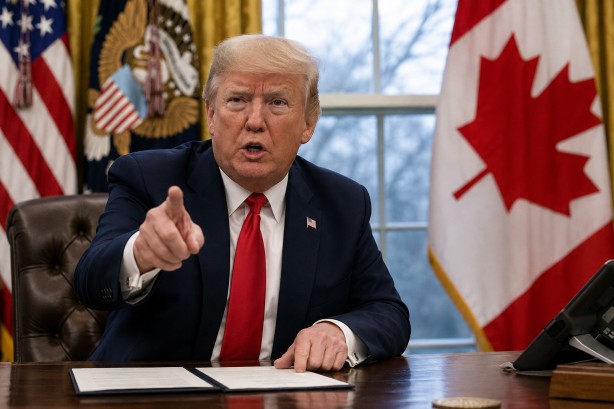
President Donald Trump has launched a fierce critique of Canada following the collapse of trade talks, escalating the trade conflict between the two nations. The United States has taken a significant step by imposing 50% tariffs on approximately $20 billion worth of Canadian imports, impacting a wide range of products. In response, Canadian Prime Minister Mark Carney vowed to implement equivalent tariffs, emphasizing that Canada will not yield to the conditions set by Washington.
Carney has labeled the situation a trade war, accusing the US of economically targeting Canada. Meanwhile, US Trade Representative Jamieson Greer has justified the tariffs, arguing they are essential to safeguarding American jobs and supply chains. This sharp exchange underscores the growing tensions between the two neighboring countries.
The unfolding trade dispute is raising alarms among businesses and politicians on both sides of the border. Canadian business organizations have expressed concern that the tariffs could lead to substantial revenue declines for exporters and small businesses. Simultaneously, American lawmakers from states bordering Canada have warned that the tariffs could drive up costs for companies, farmers, and consumers.
Canada’s planned retaliatory measures are set to be enacted on September 8, targeting a variety of products including steel, dairy goods, appliances, and electronics. This move is anticipated to further intensify the trade standoff, as both nations brace for the economic impact of these tariffs.
The escalating situation is also casting doubt on the future of the US-Mexico-Canada trade agreement, which is pivotal to a significant portion of North American trade. As the conflict deepens, the stability of this crucial trade pact remains uncertain, adding another layer of complexity to the economic relationship between the US and Canada.