

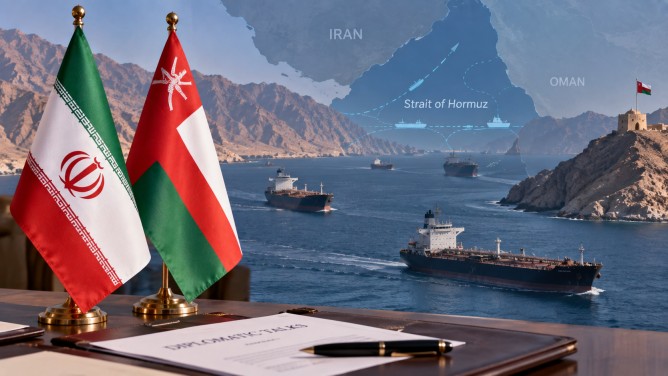
A crucial meeting involving Iran, Oman, and other Gulf nations to discuss new shipping protocols through the Strait of Hormuz has been deferred, with no new date announced yet. Originally set to occur in Muscat, the gathering aimed to address regional security and review an Iran-Oman proposal on managing commercial navigation through this key maritime corridor.
The postponement, as stated by Oman’s Foreign Minister Badr Albusaidi, was made to foster consensus. Iran concurred, noting that the decision was coordinated with Oman after some regional countries requested the delay. This development emerged following reports of an Iranian commercial vessel being attacked near Qeshm Island, resulting in one fatality and injuries to four crew members. Iranian state media reported the vessel was hit by a projectile while transiting the Strait of Hormuz, leading to a fire and subsequent crew evacuation.
Recently, Iran and Oman have been exploring alternative shipping routes through the Strait, with a proposal that would see vessels entering the Persian Gulf via Iranian waters and exiting using both Iranian and Omani waters. However, Iran has emphasized that reopening the Strait hinges on certain conditions being met, including potentially charging fees for using these routes.
Currently, commercial traffic through the Strait of Hormuz is notably reduced, posing a significant challenge given its role as a major channel for global oil shipments. This disruption has contributed to rising oil prices, with Brent crude surpassing $100 a barrel amid ongoing regional tensions. The situation is further exacerbated by Saudi Arabia’s decision to keep its 1,200-km East-West oil pipeline closed following drone attacks, thus limiting an alternative path for crude transport to the Red Sea.
Diplomatic strains in the Gulf continue to play a role in these developments, with Saudi Arabia reportedly seeking revisions to the Iran-Oman shipping arrangement. Meanwhile, Bahrain has opted not to participate in the meeting. Prolonged uncertainty regarding the Strait of Hormuz and the shutdown of the East-West pipeline could significantly threaten global oil supplies, intensifying the impact of the reduced shipping activities in the region.